
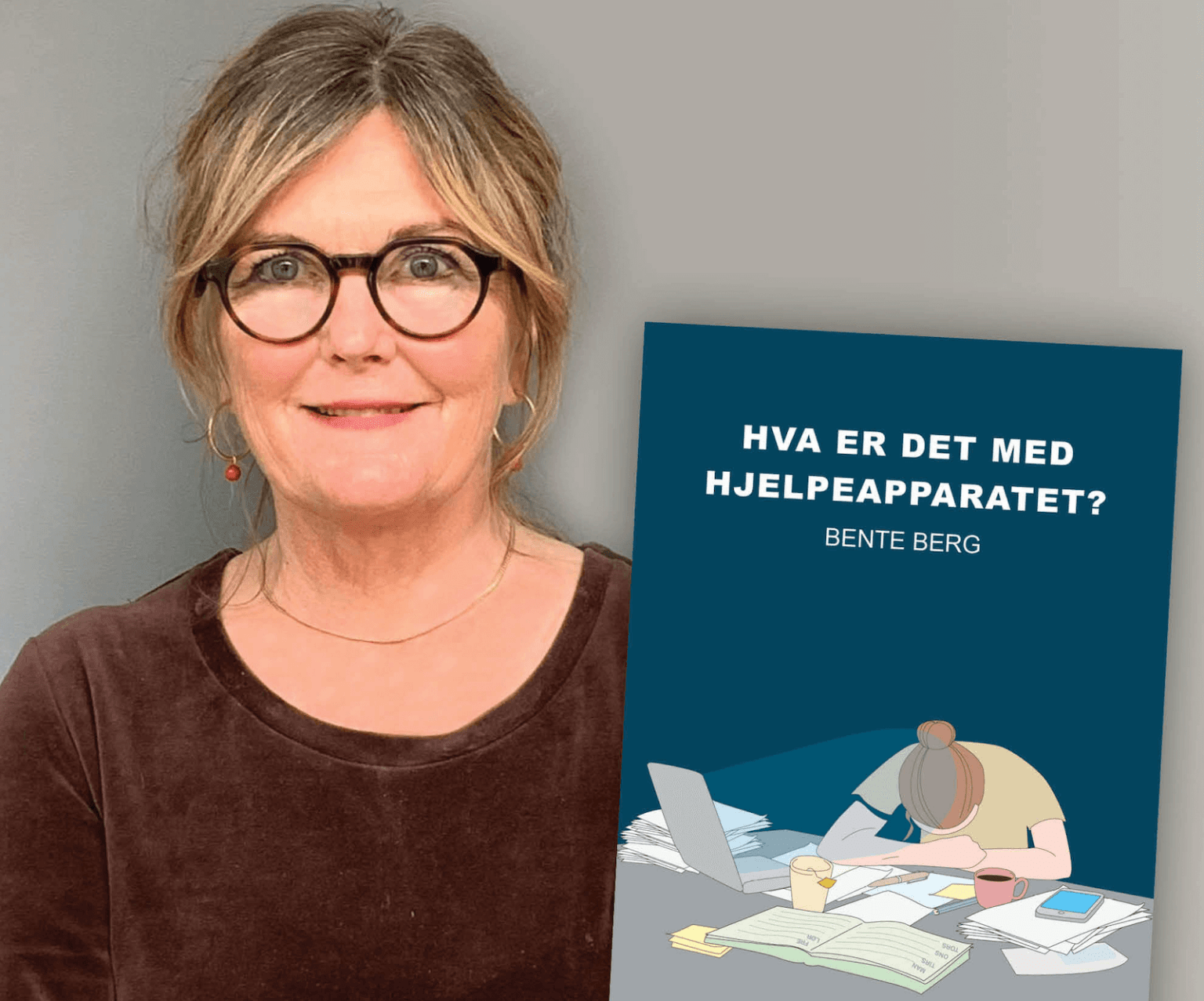
The Løvemammaene were invited to hold a two-hour lecture for managers and employees in the district administration in the Ullern district in Oslo. Bente Berg, who is one of Løvemammaene's resource persons, gave three gripping lectures based on her book "What's with the assistive device?".
The topics that were highlighted were
- Prejudice, vulnerability and loneliness of experience.
Bente Berg is concerned with how society's discrimination and stigmatization affects families who have a child with disabilities. She began by talking openly about how her own experiences from childhood and her own prejudices against people with disabilities shaped her thoughts and feelings during the first time with a child diagnosed with Cerebral Palsy. She uses the term experiential loneliness to describe the feeling of having become different in the face of the outside world – a feeling of not belonging properly anymore. Through knowing her son, her identity changes and she decides to fight for her son's life. Bente goes on to talk about her great vulnerability when dealing with the aid apparatus and about a concern that those who are supposed to help are also characterized by prejudice. She says that she is getting angrier and angrier at the same time that she is so vulnerable, so vulnerable, so vulnerable.
- Extra work for those of us who have children with disabilities
There is a lot of daily care and attention when the children have major disabilities. When you also have to deal with an assistive device, it becomes a lot. Bente pointed to an illustration from the book that shows how many offices, departments and agencies she has had to deal with in order to arrange the lives of her two sons. For Mads there were 32 places and for Nikolas there were 41. When each place consists of many employees, who are replaced at regular intervals, there are many people to deal with. It is often the parents' job to coordinate and inform everyone. It becomes a lot for parents when everyone requires written applications, rejections keep coming and we parents have to write an appeal to the State Administrator, before we get the rights we are entitled to. It often feels as if the assistive device is putting sticks in the wheels.
Bente finished by saying: Imagine if everyone who was going to help could answer with a smile and say "YES, I'll try to make that happen".
- Housing, understanding and participation.
In the last lecture, Mads has turned 28, he is 100 % in need of care and lives in a residential community with round-the-clock care. The staff have little understanding of my son's needs, he is put in the wrong wheelchair and put in the wrong bed, so that he has major breathing problems. The son is also exposed to constant accidents where the wheelchair overturns, he falls out of bed, is dressed incorrectly for the weather and is given the wrong medication. Bente tells of a struggle to be heard so that her son can have a good life. The staff don't hear what she says, she feels they see her as a fussy and fussy mother. The situation gets so bad that she questions whether her son's life is worth living. She invites all the parents of the young people in the housing association to a meeting at her home. Together, the parents contact the Patient and User Ombudsman, report to the State Administrator and have meetings with the director in the district.
She ends the lecture by showing pictures of Mads in a home which, after his parents' efforts, became a good place for Mads to live.
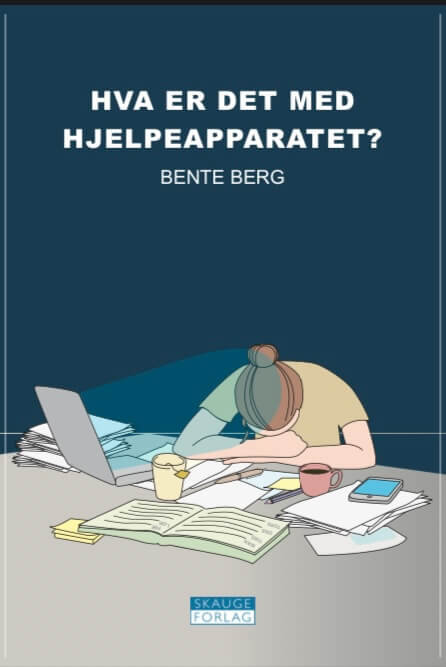
The book "What's with the assistive device?" can be purchased in Løvemammaeneen's online store. By buying the book, you also support Løvemammaeneen's work.
 English
  Norsk bokmål
  العربية
  Français
  Deutsch
  हिन्दी
  كوردی
كوردی  فارسی
فارسی  Soomaali
  Español
  Kiswahili
  தமிழ்
தமிழ்  Tigrinya
  Українська
  اردو
اردو