
School environment – chapter 12
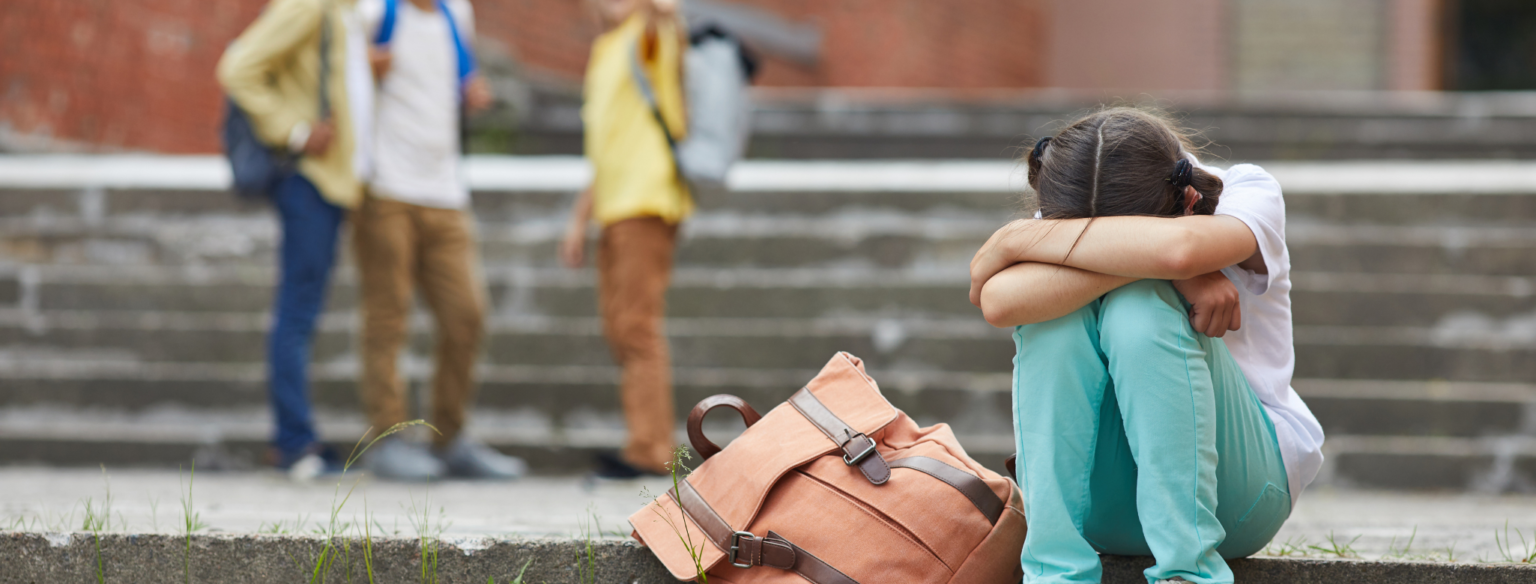
This chapter applies to children in primary school, upper secondary school and pupils who participate in after-school programs and homework help programmes. What do you do if the child is not safe and well at school?
All students have the right to a safe and good school environment that promotes health, inclusion, well-being and learning.
The school shall have zero tolerance for offensive behavior such as bullying, violence, discrimination and harassment. It is the students' own experience of how they feel at school that is decisive for whether the school environment is safe and good. It is the school's duty to work continuously and systematically to promote the health, environment and safety of the students so that the requirements in or pursuant to Chapter 12 are met - this is the principal's responsibility.
The school's duty and responsibility
The school has an activity obligation to ensure that pupils have a safe and good psychosocial school environment. Psychosocial school environment refers to the interpersonal relationships at school, the social environment and how students experience this, as well as how students experience the learning situation. Everyone who works at the school must monitor whether the students have a safe and good school environment, and intervene if they see/know about bullying, insults, violence, discrimination and harassment and stop it immediately, if possible. If it is not possible to intervene directly, all employees have a reporting obligation. This means that they must notify the principal if they suspect or know that the students do not have a safe and good school environment, and the school must then investigate the matter as soon as possible. Safety is also about knowing that the school will take action if something happens. If the school environment is safe, but not good, the school must also take action. It is enough for a student to express that they do not have a safe and/or good school environment, or that there is a suspicion, for the school to create an action plan that will ensure that the student has safety and a good school environment. The school must also ensure that the students involved are heard. The school's fundamental considerations in the work should be "what is best for the students". The action plan from the school must be in writing and it must document what is done from the first to the fifth point, and it must contain the following:
- Which problem the measures are to solve
- What measure has the school planned
- When the measures are to be implemented
- Who is responsible for the implementation of the measures
- When the measures are to be evaluated
If someone working at the school suspects or has knowledge that another person working at the school is violating, bullying, using violence, discriminating or harassing a student, the school has an additional responsibility to follow up on the matter. The person who suspects or has knowledge must immediately notify the principal, who will notify the school owner. Investigation and measures under the third and fourth points must be implemented immediately. If someone in the school management is behind the violation, the person who has suspicions or knowledge must notify the school owner directly.
The state administrator's handling of the activity obligation in individual cases
In most cases, the school finds good solutions together with the students and parents. The school has one week to reassure the student and parents that they will do something about the situation. If things do not improve, or the measures are not good enough, the student and parents can report the case to the State Administrator. In order for the State Administrator to handle the case, it must be the student or parents who report the case to the State Administrator, the student or parents must have raised the case with the principal for more than 1 week and the case must concern the student's psychosocial school environment at the school the student attends, should have attended or has temporarily transferred from. If these conditions are not met, the State Administrator will usually reject the case.
The school and school owner shall (without prejudice to the duty of confidentiality) provide all information that the State Administrator believes is necessary to resolve the case, and the State Administrator shall ensure that all students involved are heard. «What is best for the child» shall be a fundamental consideration in the State Administrator’s case processing. If the State Administrator concludes that the school has not fulfilled the activity obligation, the State Administrator may decide what the school shall do to ensure that the student has a safe and good school environment. A deadline will be set for when the decision is implemented and the State Administrator shall follow up on the case. The decision from the State Administrator is an individual decision and can be appealed in accordance with the rules in the Public Administration Act. School owners do not have the right to appeal.
To read more about the Statsforvalteren press here.
The physical environment
The schools must be planned, built, arranged and run so that safety, health, well-being and learning are taken into account for the pupils. This must be in accordance with the professional norms that the professional authorities advise at all times. If certain environmental conditions deviate from these norms, the school must be able to document that the environment nevertheless has a satisfactory effect on the health, well-being and learning of the pupils. All students have the right to a workplace that is adapted to their needs. The school must be designed in such a way that consideration is given to the students at the school who have functional variations. If measures regarding the physical environment are requested from a pupil, parent, one of the councils or committees at the school, the school must deal with the matter as soon as possible in accordance with the rules on individual decisions in the Administration Act. If the school has not, within a reasonable time, taken a position on the matter, it will be possible to appeal in accordance with the regulations in the Administration Act as if a single decision had been made.
Student participation in working with the school environment
The student must take part in the planning and execution of the work for a safe and good school environment. The Student Council can appoint representatives to look after the students' interests vis-à-vis the school and the authorities in school environment matters. To read more about participation and rights about this print here.
Duty to provide information and right to speak
The school shall inform the pupils and parents of the rights in Chapter 12, of the duty to be active and of the possibility of reporting the matter to the State Administrator. If the school knows anything about the school environment that may harm the health of the pupil, it shall notify the pupil and parents as soon as possible. The cooperation committee, the school committee, the school environment committee, the student council and the parents shall be kept informed of what is important for the school environment and shall be included in the work and school environment measures. They have the right to access all documentation relating to the systematic work, and have the right to express their views and offer ideas on all matters that are important in the school environment.
Compulsory fine
In order to ensure the implementation of the activity obligation, rules of order and a change of school for a pupil, the State Administrator and the appeals body can determine a compulsory fine (fine) for the school owner. The decision on a compulsory fine becomes effective when the school owner does not meet the deadline for implementing a decision on this, and the fine lasts until the decision is fulfilled. A decision on a compulsory fine does not take effect if it becomes difficult to comply with the decision and the person responsible cannot do anything about it. School owners do not have the right to appeal about compulsory fines.
To read more about compulsory fine print here.
Relevant legislation and information
Legal data – Chapter 12. The school environment for students
Udir – Circular about school milesyes
We at Løvemammaene are very happy that this chapter exists and is as clear as it is. We believe that it is absolutely necessary in order to maintain the well-being of students in everyday school life. Unfortunately, we know that not all schools in Norway either inform enough about the existence of this section, or do not follow it as intended, and that is therefore not allowed! Before a parent reports Chapter 12 to the principal, we recommend having spoken to the teacher and/or principal first. Here, schools should take action already by notifying them to report a Chapter 12 case, but if the schools do not take the notice seriously and do something about it, it should be reported in writing. Then the schools MUST take action!
If you receive an action plan that you do not see the purpose of, that is not good enough or that the measures have already been tried without success, you give the principal feedback about it and ask for a new action plan that is suitable for your child. If the school does not listen to your concerns regarding measures that do not work or that the action plan is being tried without positive results, you report it to the State Administrator. We would like to emphasize that it is perfectly okay to report Chapter 12, both to the principal and to the State Administrator. This is about the best interests of the child and all parties should be equally concerned about it.
If you should experience violation or harassment by the school towards you parents, experience very poor cooperation or have a high level of conflict with the school, read here. We have created a document about various agencies parents can contact and which way to go.
Table of contents
- SUBJECTS: Rights
- Published:
- The lion mothers
- SUBJECTS: Rights
- Published:
- The lion mothers
 English
  Norsk bokmål
  العربية
  Français
  Deutsch
  हिन्दी
  كوردی
كوردی  فارسی
فارسی  Soomaali
  Español
  Kiswahili
  தமிழ்
தமிழ்  Tigrinya
  Українська
  اردو
اردو