
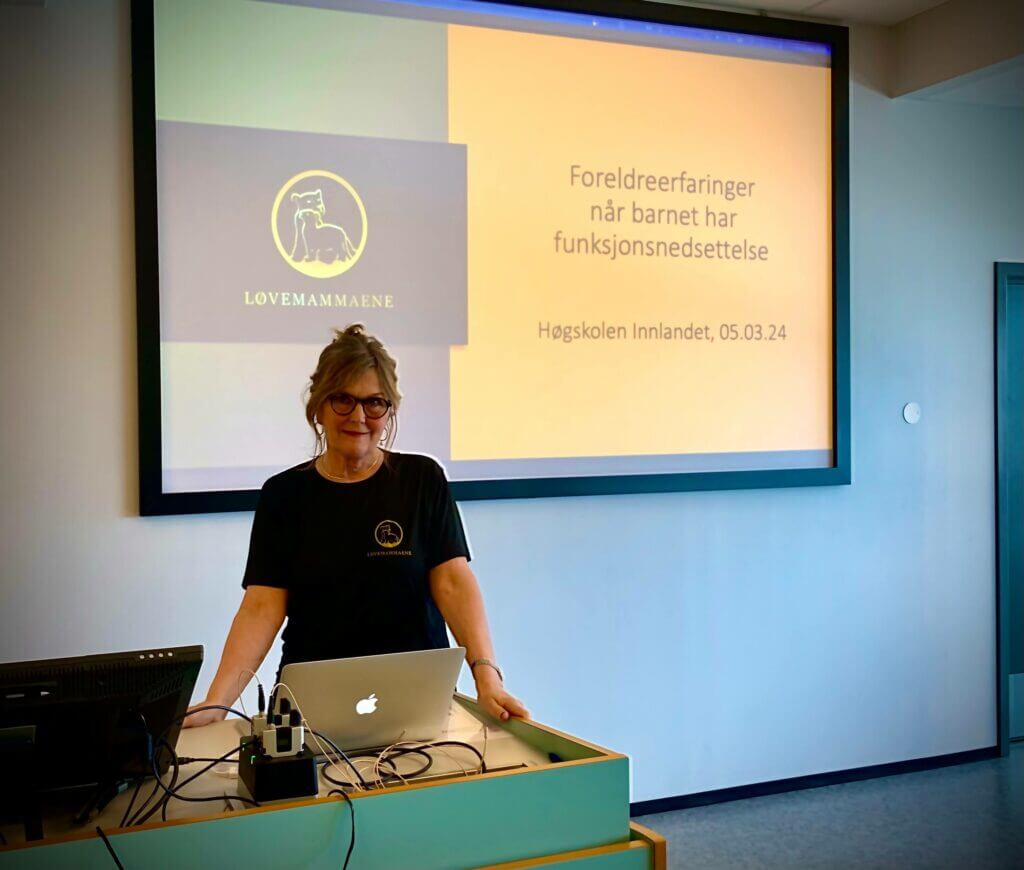
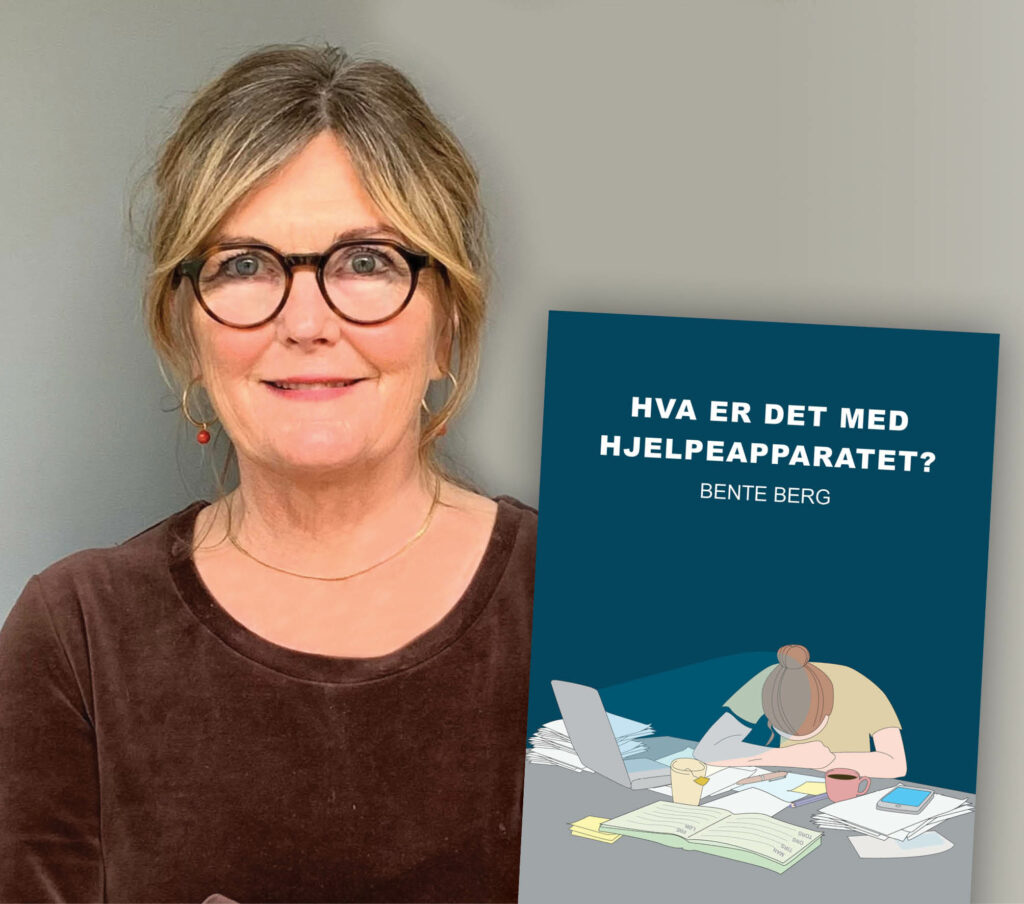
For the third year in a row, Løvemammaene was invited to give a lecture at Interdisciplinary further education in rehabilitation, interaction and management. Bente Berg's starting point was his book "What's wrong with the auxiliary apparatus?" in his three-hour lecture.
The first time
The importance of health personnel's competence and interest in empathic communication was the first topic. She told of two different experiences of how the diagnosis of her two children was communicated by doctors at the hospital. When we got the diagnosis for Mads, an unknown doctor arrived at a bad time, who said that Mads had a major neurological injury and that children with such extensive injuries do not live long. Then he moved on to the next patient. When we received the diagnosis for Nikolas, which was also a serious diagnosis, we were looked after in a completely different way. We sat in a living room with the doctor and nurse who had followed us through the examination. They took care of themselves and showed great empathy and understanding.
Experience loneliness
Bent Berg uses the term experiential loneliness to describe the feeling of having become different in the face of the outside world – a feeling of not belonging properly anymore. It can be difficult to be with both friends and family who are preoccupied with completely different things. One can feel lonely with others. She talks about a desire to meet other families in a similar situation.
How to help reduce the experience of loneliness
Research shows that parents of children with different diagnoses benefit greatly from meeting each other in groups. There they can learn how to find their way around the support system and how to handle the family situation. Bente talked about how employees in the support system can plan, implement and evaluate Starthjelp, which is a four-day tailored offer for those who have a child with a disability. (You can read more about it at mestring.no).
Understanding and participation
In the last lecture, Bente Berg goes 25 years into the future. Mads is 100 % in need of care and lives in a residential community with round-the-clock care. The staff have little understanding of the son's needs, he is put in the wrong wheelchair and put in the wrong bed, so that he has major breathing problems. The son is also exposed to constant accidents where the wheelchair overturns, he falls out of bed, is dressed incorrectly for the weather and is given the wrong medication.
Bente tells of a struggle to be heard so that her son can have a good life. The staff don't hear what she says, she feels they see her as a fussy and fussy mother. The situation gets so bad that she questions whether her son's life is worth living. After a joint effort from all the parents in the home, a report of concern to the State Administrator and a meeting with the director of the district, the home is changed and the young people get a dignified life again.
The lecture ends with a small photo collage from the home showing when Mads is well.
 English
  Norsk bokmål
  العربية
  Français
  Deutsch
  हिन्दी
  كوردی
كوردی  فارسی
فارسی  Soomaali
  Español
  Kiswahili
  தமிழ்
தமிழ்  Tigrinya
  Українська
  اردو
اردو