
Relief
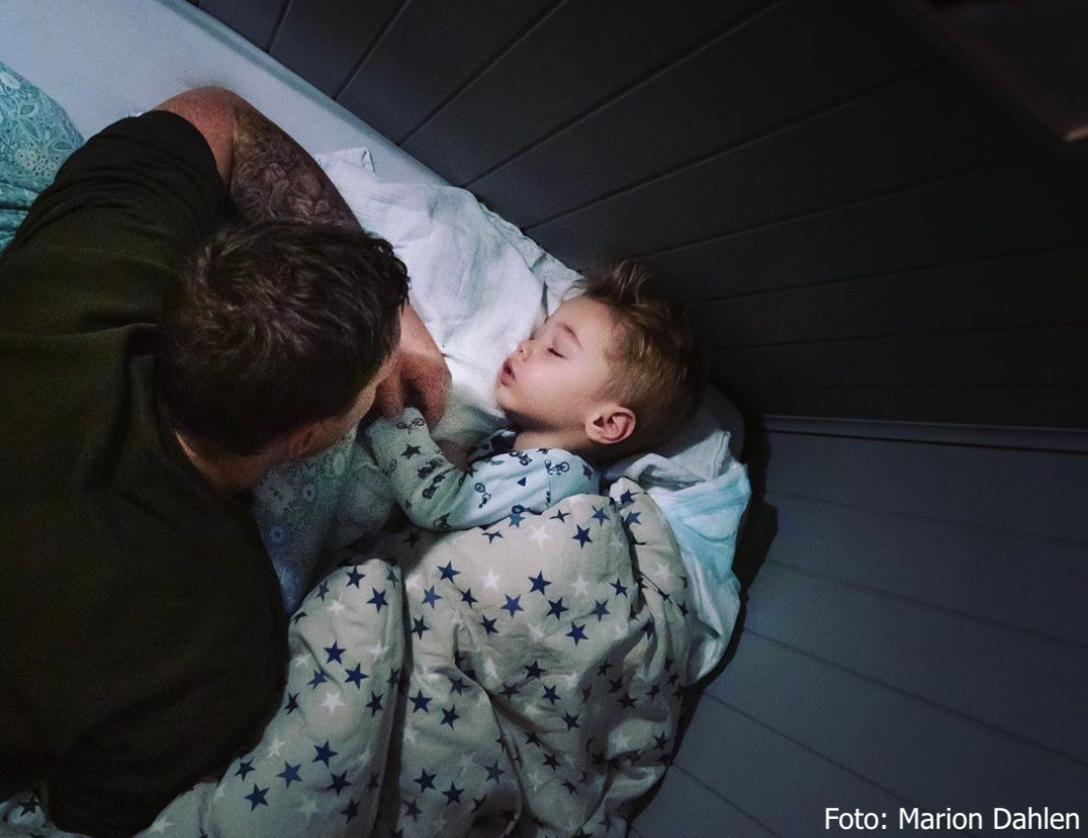
Respite services must provide parents who have a large care burden/particularly burdensome care tasks for their children, necessary and regular free time, rest and the opportunity to participate in "ordinary activities" in society. There are several ways to organize relief, depending on what suits the individual child and family.
By particularly onerous care tasks is meant care work that is more physically and/or psychologically demanding than the usual care work you have as a parent. It can e.g. mean care for children who play a lot and who require a predictable and structured everyday life, or children who cannot move themselves and who need help to do everything they can on their own. It can also mean care work that involves a lot of night work or interruptions in night sleep. These are just a few examples, but it basically means that you have children who need more help than their age would normally indicate.
It is also a requirement that the care work extends over time.
Municipal services such as practical assistance, and welfare technology (e.g. notification and localization equipment), can be provided as relief for you as a carer. Relief measures are free. The municipality cannot demand out-of-pocket payment for relief. This also applies to transport, practical assistance, offers at day care centers or short-term stays in institutions, i.e. services with a relieving effect for which a deductible may otherwise be required.
Forms of relief
- With an approved relief family through the municipality
- Private arrangement with own family/friends
- Relief home/children's home
- In the home
- Organized as BPA
- There is also support contact
How to apply for relief?
It is a municipal scheme that you apply to the municipality. If you have coordinator or children's coordinator, the coordinator can help with applications for relief.
You must either be able to apply electronically or find an application form that you can print out on the municipality's website. If it is difficult, you should contact the municipality. The department that deals with such applications is often called the service and coordination office, ordering office, application office or allocation office (Dear child has many names!), but it is also possible to call the switchboard to be forwarded to the right place.
What do you have to keep in mind?
- Medical certificate
- Any statement from the relevant authorities and professionals who follow your child
- Day wheel (download example in PDF below)
- Application text with a description of medical needs and other needs, as well as their wishes about the type of relief
- If you have a coordinator, it is a good idea to have a chat with the coordinator to talk about needs, types of relief the municipality offers, the possibility of going on a "view" of the relief housing and asking about things you might wonder about.
- The coordinator can help with an application, but if you don't have one, a social worker at the hospital can assist with this
24-hour clock templates
If you are a member of Løvemammaene, you can download an example of a 24-hour clock in our closed intranet for members. You can find this in Gnist, link is here.
Private relief
For many, the idea of placing the child with "strangers" is completely out of the question and the desire for a close carer would like to apply. There is nothing in the legislation that prevents family or friends from being relief workers, but we know from experience that municipalities can be difficult when it comes to close family and argue against using this type of relief. The law says that, on the other hand, the municipality must "decide that measures should be implemented to ease the burden of care and what the measures should consist of".
There is, however, an important section in Chapter 3 of the Patient and User Rights Act which may be useful to remember in the meeting with the municipality:
"As far as possible, the service offering must be designed in collaboration with the patient or user. Great emphasis must be placed on what the patients or the user think when designing service offerings. If the patient does not have the competence to consent, the patient's next of kin has the right to participate together with the patient".
The municipalities are thus obliged, through the Patient and User Rights Act, to ensure that people are heard to a large extent when designing municipal services, including relief. This means that they must have very good arguments for why private relief is not justifiable, in order to override the child's/parents' opinions and wishes.
Relief with an approved family
This is in principle the same as private relief, but with a family that is not in a close relationship with the child. The municipalities have an overview of relief families. All relievers must have passed Norwegian B1 and have submitted a police certificate.
Respite housing
The respite accommodation must, among other things, cover the child's social needs and provide opportunities for togetherness and social contact through varied and adapted activities. There are also guidelines for the physical arrangement of relief housing, such as that they should resemble ordinary homes (detached houses or terraced houses), and be conveniently located for leisure activities and play areas.
Challenges with respite housing can be frequent replacement of personnel, institutionalized housing, and insufficient expertise in medically complex children and children with complex care and care needs.
Advantages of respite housing can be that you get a real break from the burdensome care work, do not have to be on standby in the same way as when the child is at home, and thus get to relax properly.
However, the municipality is responsible for ensuring quality in the service, qualified personnel at work, competence coverage and competence enhancement, and necessary training.
Good communication between parents, the child and the staff in the home is extremely important to meet the child's needs.
Relief organized as BPA
If you wish to apply for and organize relief such as BPA, this is perfectly possible as long as the number of hours for relief (and any other services) in total meets the requirement for BPA (25-32 hours per week). If you already have a relief decision, you can only apply to have this converted into a BPA.
It can be organized in various ways, but in practice means that the child goes on respite care and that the BPA assistants follow the child, and work in regular shifts where the child is. It can either be with private relief workers or at a relief home with staff, but the child needs their BPA assistants in addition for safety and security reasons. A BPA assistant can also be a reliever and have the child at home, and e.g. work 8am-4pm, while the other BPA assistants work in shifts as usual. Likewise, you can choose to have relief at home. The possibilities are many.
Relief at home
It is possible to have relief organized at home if this is best for the child/family situation. The purpose of this may be that the child is safest in his own home, or that there is a lot of equipment that the child depends on which makes it difficult to travel away. Respite in the home means that a private respite worker comes to the family's home and is with the child there, or that the assistants look after the child if you have respite in the BPA scheme. The parents can choose whether they want to stay at home or go out.
Relief during holidays
Unfortunately, we often receive inquiries from parents who feel that the municipality will not provide relief during holidays, but this is not necessarily correct or in line with the law. The law states that the municipality is obliged to provide statutory health and care services, which is relief, also during holidays. We recommend those of you who have municipalities that refuse you relief during the holiday, to read/download the letter from the Directorate of Health below here. It clearly states what obligations the municipality has.
Read more about the right to relief during holidays here.
Illness during relief
Parents are entitled to relief, even if the child is ill. The municipality cannot simply order parents to pick up the child for relief, or refuse to accept the child because he is ill.
Read more about these rights here.
Transportation to and from unloading
Relief is, as mentioned, free, and this also applies to transport to and from relief. When the municipality makes a decision on relief, the municipality must also make a decision on transport (e.g. taxi, school shuttle or similar). If you parents drive the child to and from respite care yourself, you must receive a driving allowance from the municipality for this.
Who will pay, and for what?
The municipality has an obligation to offer necessary health and care services, which is also relief. This means that the municipality must pay for the services it is obliged to offer. This means that it is the body that has the responsibility to "take care of" the relevant health and care service, which also has funding responsibility.
This does not mean that the municipality must cover the child's pocket money or the like, but that they must cover expenses for necessary medicines and equipment (e.g. nappies, wipes, toiletries etc.), and cannot demand that the home cover this. Read more in the Directorate of Health's assessment below here.
Some people find that municipalities arrange activities and outings for the children while they are on relief, which is primarily pleasant and well-intentioned. It is desirable that the children get to experience and have a good time when they are on respite care, however there is a lack of clear clarification in the legislation on who is responsible for paying for such things. Overall, the law states that respite must be free, so one should not immediately accept being charged for activities that are initiated by the municipality and planned for everyone in the respite housing. If the home, for example, arranges a trip to an aquarium or an amusement park for everyone in the home, then it is the municipality that should cover that cost. If not, there is a risk that some parents can afford and others cannot afford for the children to join - and since this is a public event, the municipality can quickly move into discrimination legislation if the possibility of payment becomes an exclusion factor. But again, there is no unambiguous legislation on this yet, so the most important thing to do is to clarify with the municipality in advance.
Is relief something for us?
Many people find it a difficult thought to send their child to respite care, whether it is private or residential. Some may feel they have failed as parents because they can't bear it or are afraid that the child will not do well on respite care. Whether the relief is organized with family or at home, preparations, communication of wishes and interests, and not least getting used to it, are important. Many go to great lengths to make the child's time at relief as rich in experience, "cozy" and fun as possible. During respite care, children also get one-to-one attention, or preferably more, and are the center of attention during the time they are there.
It is important to remember that we parents must be well. Then we must be given the opportunity to rest and recover, be lovers, prioritize our siblings and do things that we otherwise don't have the time or opportunity to do. That way, we can be the best possible version of ourselves all the other hours, days and weeks of the year when the child is at home. You are far from a failure if you take measures to improve the whole family's quality of life. Relief is therefore not something you do only for yourself, but also for the children and the family as a whole.
Relevant legislation and guidelines
The Norwegian Directorate of Health on the municipality's duty to offer relief:
Relatives supervisor, Norwegian Directorate of Health
The Norwegian Health Authority's supervisor for nationwide supervision
"Relieving is a free service. This follows from the regulations to the Social Services Act (1992-12-04 no. 915) § 8-2 first paragraph no. 3. According to § 8-2 of the regulations, the caregiver cannot be charged remuneration (payment) for relief. Circular I-1/94 p. 74 (on relief measures) states that "the service also includes a companion, transport, food and the like". In a letter dated 26 September 1996 from the former Ministry of Social Affairs and Health to Alstahaug municipality, it is stated that "this should be understood so that relief measures must include transport to and from home/relief home, companion and food in those cases where there is a need for it".
Patient and User Rights Act Section 2-8.Measures for particularly burdensome care tasks
The Health and Care Services Act: § 3-6 The municipality's responsibility towards relatives
This article was last updated on 03.11.25
Table of contents
- SUBJECTS: Relief, Life with a sick child, Rights
- Published:
- The lion mothers
- SUBJECTS: Relief, Life with a sick child, Rights
- Published:
- The lion mothers
 English
  Norsk bokmål
  العربية
  Français
  Deutsch
  हिन्दी
  كوردی
كوردی  فارسی
فارسی  Soomaali
  Español
  Kiswahili
  தமிழ்
தமிழ்  Tigrinya
  Українська
  اردو
اردو