
Rare diagnosis – what now?
Being the parent of a child with a rare diagnosis can be and is tough. You often encounter challenges where it can be difficult to know where to turn for help, you can feel alone and often have many questions and few answers. In this article, we have tried to collect information that may be useful to know something about, perhaps especially in the first period after the diagnosis has been made.
In Norway and large parts of the world, a diagnosis is defined as rare when it affects fewer than 1 in 2,000 people. There are approx. 7000 different rare diagnoses as we know about today. If we look at each individual rare diagnosis separately, it will affect very few people (that is precisely why it is called rare), but if we look at all diagnoses that are defined as rare together, we will have a figure of 300 million people worldwide!
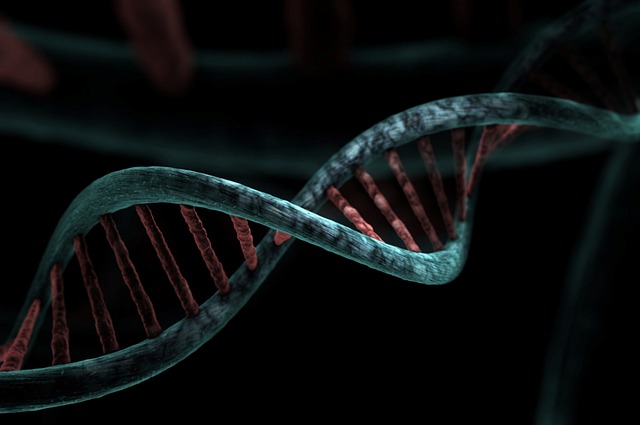
Over 70 % of diagnoses defined as rare have a genetic cause. Therefore, in most cases where such a diagnosis is suspected, a genetic test will be carried out on the child in question. Here, the DNA sequences in one or more genes are examined to possibly uncover a mutation, error or break in the sequence. Sometimes it may also be relevant to take a sample from the parents to compare findings from them with findings from the child. You have the right to a conversation with a geneticist/genetics department if your child is diagnosed with a gene variation. Here you will receive information about the genetic variation, inheritance, rights in case of any other pregnancies and other information that may be useful.
Many rare diagnoses give a complex disease picture with a great need for help and follow-up from several different agencies. Many people experience that the ordinary support system may lack knowledge about the diagnosis and that you yourself become the expert and impart knowledge when dealing with this, or that you do not get the help you are entitled to. It can feel lonely and frustrating. In addition, it can be difficult to find others with the same diagnosis if the diagnosis is ultra-rare.
"Therefore, it is extra demanding to be the parent of a child with a rare diagnosis"
Being the parent of a child with a chronic illness or condition can be demanding. If the diagnosis is also rare, the care task can be more challenging because the support staff lacks knowledge of the condition.
Many thousands of different rare diagnoses are being researched, but few studies have examined what may be common denominators for parents across rare conditions. Therefore have Center for rare diagnoses gone through a number of studies that have been published over the past 20 years and that shed light on parents' experiences when their child has a rare diagnosis. Three main themes emerged in this review, which you can read more about here.
National competence service for rare diagnoses
Norway hasnine competence centresfor rare diagnoses. On this link you will find further links to the following competence centers:
- Frambu competence center for rare diagnoses
- National Competence Center for Porphyria Diseases
- National Competence Center for Rare Epilepsy-Related Diagnoses
- Neuromuscular Competence Centre
- National Center of Excellence for Neurodevelopmental Disorders and Hypersomnias
- Norwegian Center for Cystic Fibrosis
- Center for Rare Diagnoses, SSD
- National Center for Rare Diseases, Oral Health Unit
- TRS competence center for rare diagnoses
The target groups of these centers are people with the rare diagnosis, their relatives and the support system around them. All of these centers are organized under the National Competence Service for Rare Diagnoses (NKSD) and have the purpose of contributing to an equal and good offer for people with these diagnoses. NKSD has a national responsibility to ensure that people with rare diagnoses, their relatives, professionals and the public have access to updated information about rare diagnoses.The competence centrescan, among other things, be helpful in seeking information about the diagnosis both nationally and internationally, providing guidance and helping people and families to get in touch with others with the same diagnosis. Onhelsenorge.noyou will find an overview of rare diagnoses. You can also callThe rare phoneat 800 41 710.
It is the picture of the illness that determines which rights and benefits you are entitled to. These are usually universal and apply whether the diagnosis is rare or not. When applying for services or financial benefits due to the rare diagnosis, it is very important to describe the diagnosis and how it develops. Most likely, the person who receives the application has no knowledge whatsoever about the diagnosis and needs to be fed in with teaspoons in order to form a picture of the situation. It is also important to attach a statement from the specialist health service. Although there is no automaticity in which rights and benefits you are entitled to in the event of a rare diagnosis, there are certain things that may be more relevant than others.
- Facilitation inkindergarten or school
- Accompanying certificate
- Caring allowance
- Training money
- Aids
- Individual plan
- Children's coordinator
- Relief
- BPA
- Financial coverage ofcourses and other services
- Right to treatment inabroad
- Benefits and other services
In 2021, the government came up with the very firstThe national strategy for rare diagnoses. The strategy's main goal is that everyone in Norway who is born with or later in life receives a rare diagnosis should have equal access toinvestigation, diagnostics,treatmentand good quality follow-up.
In 2023, NKSD launched a new website calledrarely.no. This new knowledge portal now offers a more comprehensive overview of rare diagnoses than what has existed until now. The list is intended to be an aid for healthcare personnel, so that they can more easily recognize and identify patients with rare conditions and find knowledge about the diagnosis, writes NKSD. The editor for räll.no says that there has long been a need for one door. That professionals in particular have wanted easier access and a more comprehensive overview of diagnosis descriptions and research in the field.
Tips
- On the international websiterareconnect.orgYou can search for and find others who have children with the same diagnosis elsewhere in the world. You must create an account to be able to post in the forum.
- The websiteOMIMis a kind of encyclopedia of human genetics, and here you can search yellow and green for a diagnosis that may fit the child's illness and symptoms if you are still looking for a diagnosis, as well as see reported symptoms for the various registered diagnoses. It may be a good idea to seethe help videosbefore you start searching.
- In the podcast seriesA rare perspectiveYou can hear members from the Lion Mothers talk about the pursuit of a rare diagnosis, the uncertainty and fear, and the power of a diagnosis.
- OUS has its own podcast calledThe rare pod.
- Otherwise, you will find more tips about rare pods here.
This article was last updated on 03.11.25
Table of contents
- SUBJECTS: Current affairs, Good advice, Rights
- Published:
- The lion mothers
- SUBJECTS: Current affairs, Good advice, Rights
- Published:
- The lion mothers
 English
  Norsk bokmål
  العربية
  Français
  Deutsch
  हिन्दी
  كوردی
كوردی  فارسی
فارسی  Soomaali
  Español
  Kiswahili
  தமிழ்
தமிழ்  Tigrinya
  Українська
  اردو
اردو